
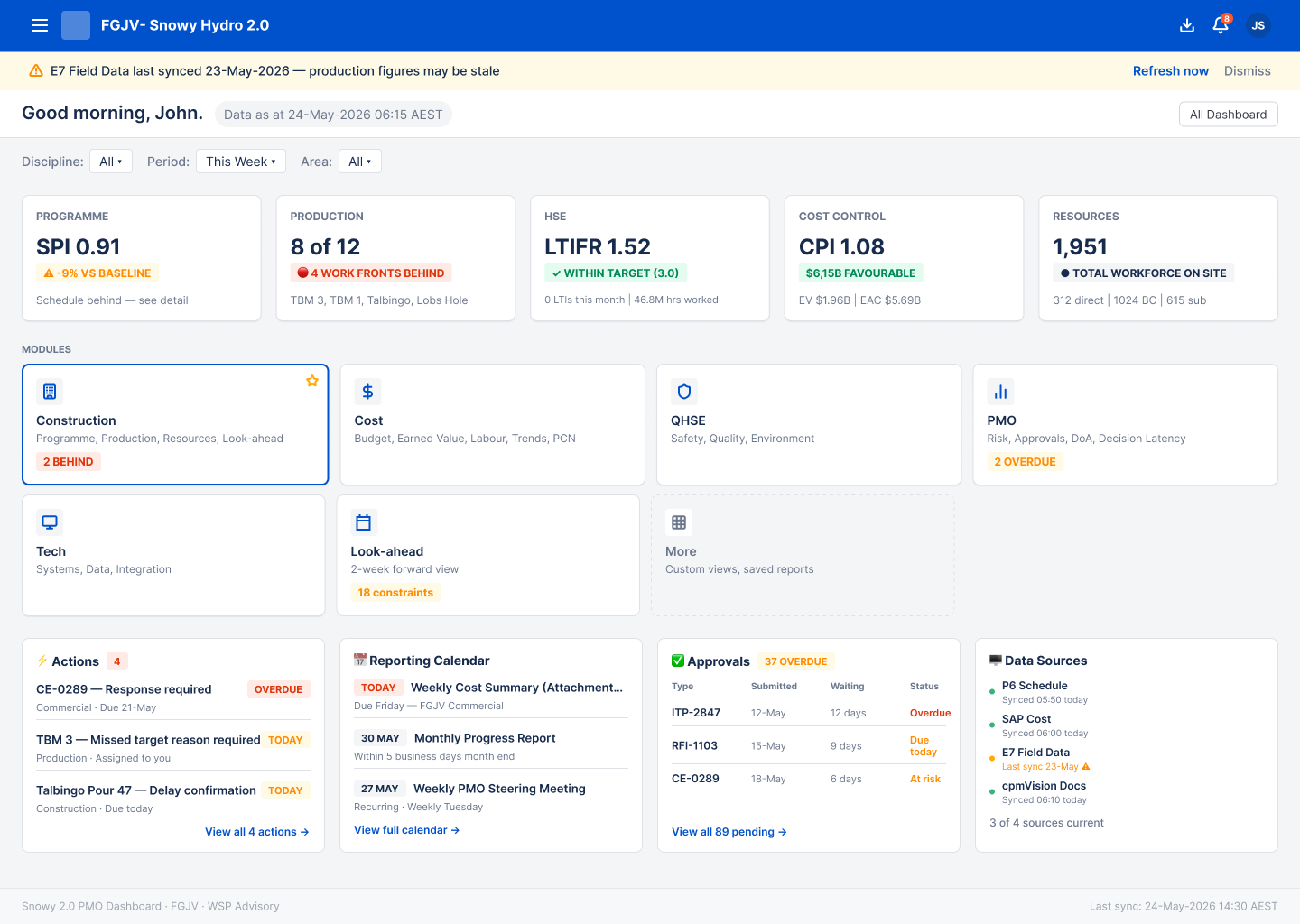
Major Infrastructure — Simplifying Project Controls
I worked with project controls, engineering and operational teams on Snowy 2.0 to translate complex infrastructure workflows into clear digital concepts and interactive prototypes. Through on-site discovery in Cooma, I helped the team clarify requirements earlier and reduce ambiguity before development.
The challenge from day one
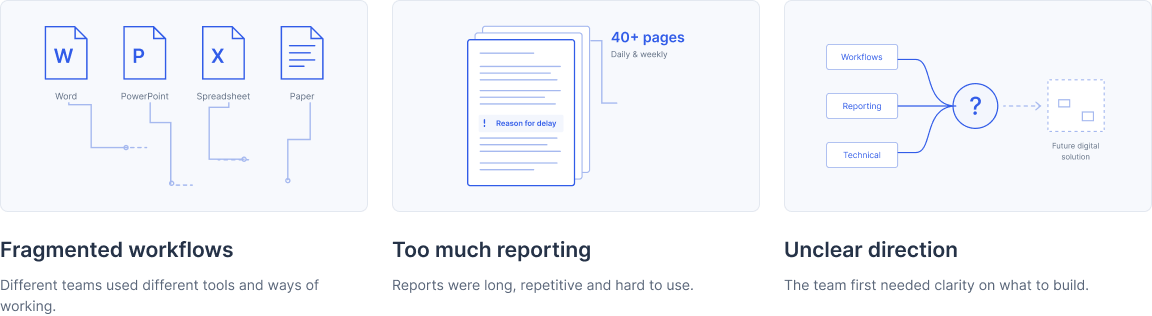
1. Fragmented ways of working
Different teams followed different processes and used different tools, from Word and PowerPoint to spreadsheets and paper. Information was inconsistent, difficult to trace and sometimes lost.
2. Reporting created noise, not insight
Daily and weekly reports could run to more than 40 pages, with large amounts of low-value information. Key issues such as the reasons behind delays were often hard to find or missing altogether.
3. No clear digital solution yet
There was no shared view of what the future product should look like. The team first needed to understand the workflows, reporting needs and technical constraints before deciding what to build.
Impact
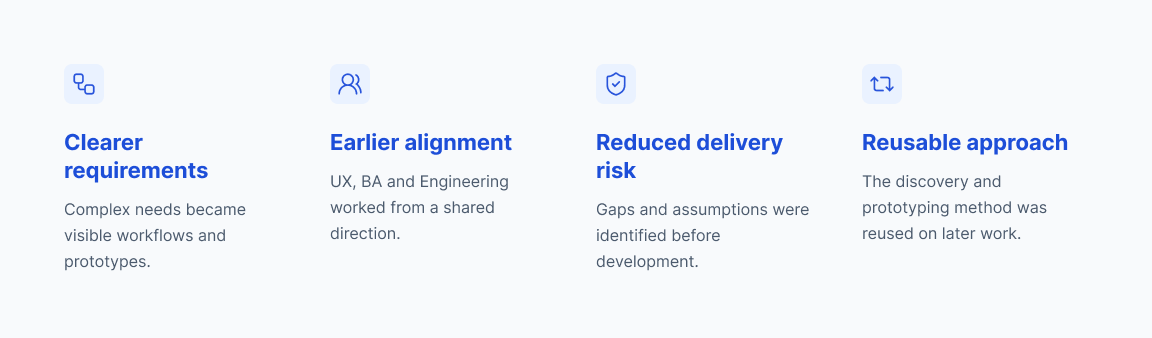
From unclear workflows to a shared, testable direction.
Mapping real-world decision making
Understanding how decisions were really made
I didn’t have a clear product brief to start with. Through on-site discovery and conversations with project controls and operational teams, I mapped how key decisions happened across the week — from reviewing escalations and programme performance to preparing the weekly report.
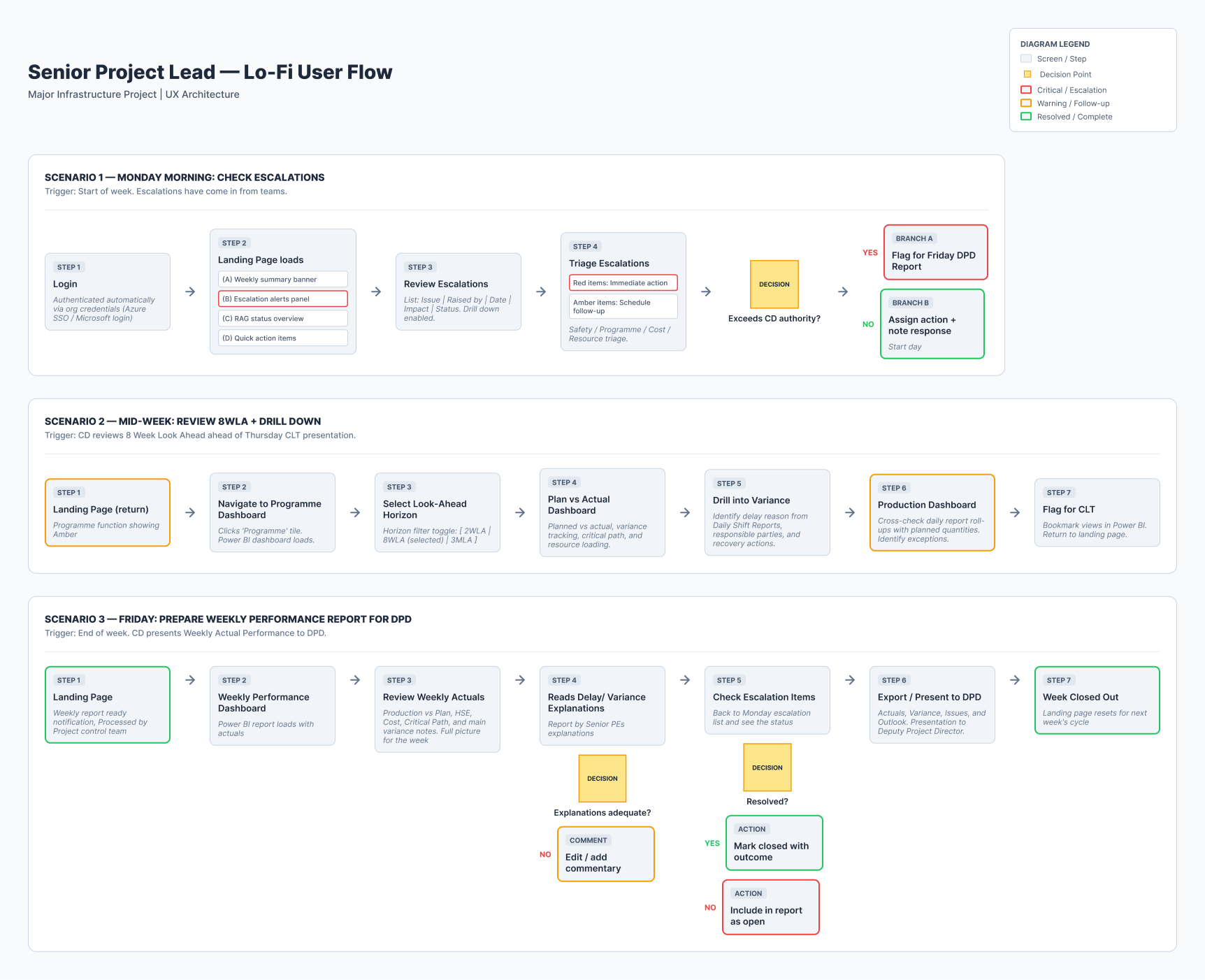
Example: Construction Director workflow mapped from discovery — showing how escalations, programme reviews and weekly reporting connected across the week.
Using AI to turn ambiguity into a testable MVP
1. Find the real problem
Used Rovo AI to work through existing project information, surface recurring business problems and clarify the outcomes the team was trying to achieve.
2. Shape the MVP workflow
Used Rovo to help organise workflows, decision points and user needs, then reviewed and refined the output myself. I deliberately focused on the minimum flow needed for the MVP rather than trying to define the entire future product.
3. Validate with domain experts
Took the proposed flow to the National PMO and Project Controls Executive to challenge assumptions, fill gaps and confirm whether the direction reflected how the work should operate.
4. Prototype before everything was known
Rather than waiting for perfect requirements, I used AI to accelerate lo-fi exploration and Claude to build a functional prototype. The prototype became a conversation tool for the team, helping expose questions and unresolved decisions early.
5. Turn it into an end-to-end concept
Within 3 days, I developed an end-to-end MVP flow and prototype that could be shown to the client and used to support the next phase of the engagement.

AI accelerated the work, but the decisions stayed human — I used domain expertise, stakeholder validation and product judgement to decide what belonged in the MVP.
Looking beyond the interface
Domain learning
I quickly built an understanding of unfamiliar project-controls and operational workflows by working directly with subject-matter experts.
Cross-functional leadership
I brought PMO, Project Controls, BA and Engineering into the same conversation and used prototypes to create a shared direction.
Delivery thinking
I focused on the MVP first, used AI to accelerate exploration, and validated decisions early rather than waiting for perfect requirements.
The biggest lesson was that progress came from creating clarity early — not from trying to define the perfect solution upfront.